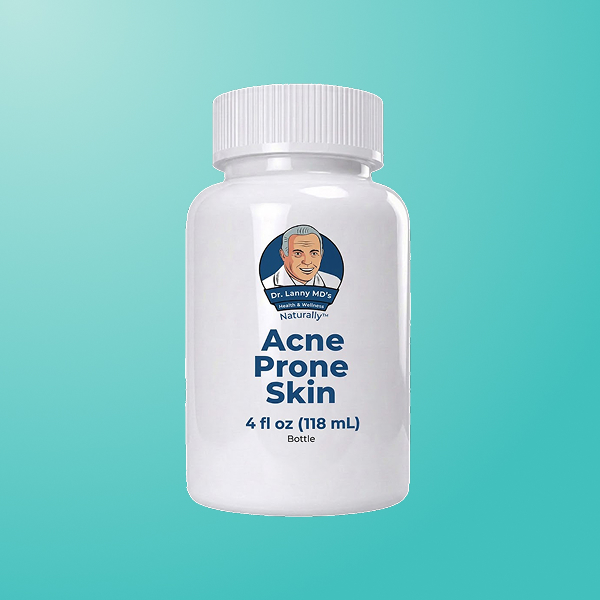

Description
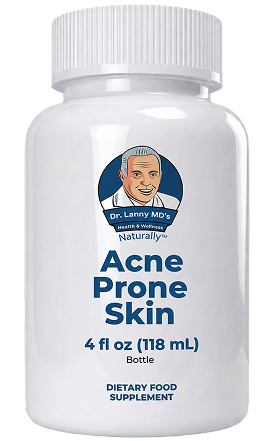
*Compared to over
the counter medication
|
Dual |
Penetrates |
Side |
Patented |
Acne Prone
 |
|
|
None |
|
Big Pharma
 |
|
|
Potential |
|
Developed Through Medical Research
Acne-prone was discovered during a two-year, four-phase human study conducted in collaboration with Loma Linda Medical School.
Originally developed to reduce surgical skin bacteria, researchers observed its significant benefit for acne-prone skin.
This led to U.S. patents covering the formulation and its use for inhibiting Cutibacterium acnes while preserving normal skin flora.
Buy NowA Smarter Way to Support Clear Skin
Unlike many over-the-counter products that rely solely on surface drying agents, Acne-prone was formulated to:
✔ Support microbial balance
✔ Preserve beneficial skin bacteria
✔ Provide antioxidant protection
✔ Avoid heavy pore-clogging oils
How It
Targeted support for acne-prone skin - backed by science.

Evidence-Based Research
Published studies demonstrated that topical PCA significantly reduced Cutibacterium acnes on human skin in controlled settings.
Peer-reviewed publications include:
Jalali, Omid; Best, Molly; Wong, Alison; Schaeffer, Brett; Bauer, Brendon; Johnson, Lanny.
Reduced Bacterial Burden of the Skin Surrounding the Shoulder Joint Following Topical
Protocatechuic Acid Application Results of a Pilot Study. JBJS Open Access d 2020: e19.00078.
http://dx.doi.org/10.2106/JBJS.OA.19.00078.
U.S. Patent Portfolio includes:
9,498,413
9,925,152
10,265,285
These patents reflect laboratory and clinical investigation into PCA’s antimicrobial and antioxidant properties.
View Scientific Study
Why PCA?
Protocatechuic acid (PCA):
• Occurs naturally in fruits and vegetables
• Is a metabolite of anthocyanins
• Is designated as Generally Recognized As Safe (GRAS) for flavoring use
• Is produced naturally in small amounts by the human microbiome
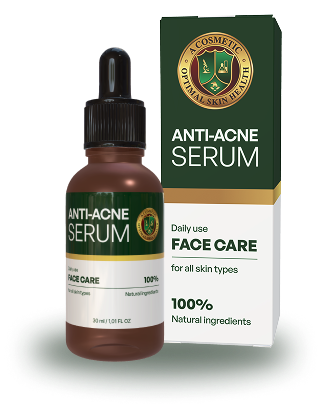
Acne-prone is a cosmetic serum. It is not a pharmaceutical drug.
View Scientific Study
FAQ’s
Frequently Asked Questions
Is Acne-prone a drug?
No. It is a cosmetic formulation.
Is PCA safe?
Yes. PCA is naturally occurring and designated generally recognized as safe by the FDA.
Can I use it with other skincare products?
Yes, unless they are heavy oil-based products that may block skin penetration.
Will it leave residue?
Yes, if applied too heavily. If so, may be removed with soap and water, and if not, may require rubbing alcohol.
How often should I apply it?
Once daily at bedtime is typically sufficient.